Japanese can feel less foreign when the vowels already have a place to land.
For some learners, especially Spanish speakers, Japanese vowel sounds feel familiar. That does not remove the work, but it changes the first listening barrier.
If you came from the thread
Spanish speakers often notice that Japanese vowels feel surprisingly familiar. That does not make Japanese easy, but it can lower the first sound barrier and make repeated listening more useful.
The issue is often exposure frequency and friction, not only talent or motivation.
Instead of one heroic session, make words return in small repeatable moments.
Use Japanese vocabulary as a small passive loop before the next real study session.
A language is easier to begin when the first sounds do not feel like a wall.
Familiar vowels reduce the first shock
Japanese has a relatively small and stable vowel system. If your first language already has similar vowel targets, the sound of Japanese may feel less alien at the beginning.
Familiar is not the same as automatic
Even when the vowels feel close, the learner still has to connect sound, kana, pitch, rhythm, and vocabulary. The advantage is a lower entry barrier, not instant fluency.
Listening makes the map usable
The sound map becomes useful when words return often enough. Hearing Japanese and seeing meaning together helps the learner turn a familiar sound into a usable word.
Use sound familiarity as a starting point
The vowels are easy, so Japanese is easy
A familiar vowel system can make the first step smoother, but grammar, vocabulary, kanji, and rhythm still require repeated contact.
The vowels are familiar, so start listening
If Japanese sounds feel approachable, use that advantage. Let words return as sound and meaning before the language turns into only textbook symbols.
Turn familiar sounds into words
Hear
Let the Japanese word enter through sound.
See
Connect the sound with kana and meaning.
Repeat
Meet it again until the word feels less foreign.
Use repeated sound exposure for Japanese
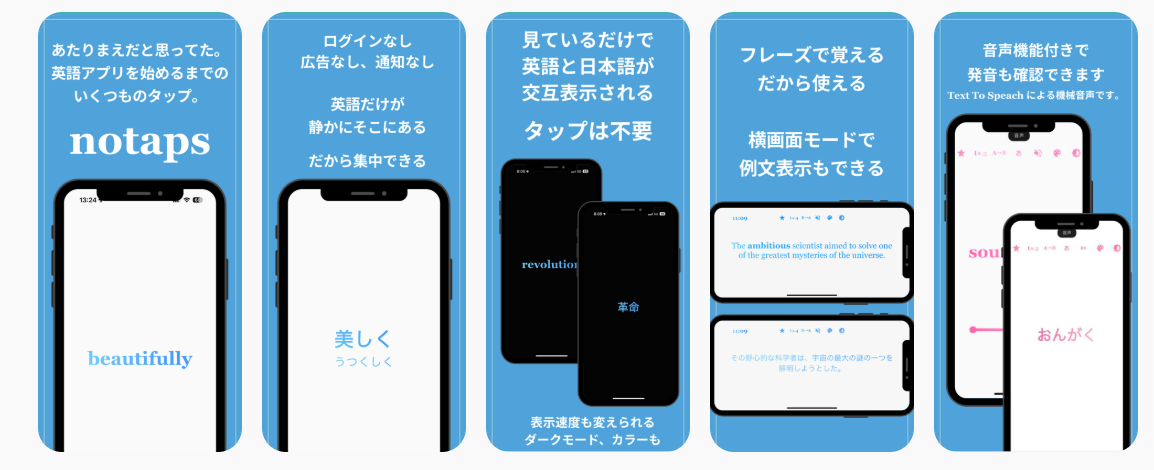
notaps supports global vocabulary learning, including Japanese. It can auto-play words and meanings, giving you small repeated encounters with Japanese sound, spelling, and meaning without tapping through a deck.
A familiar sound is an opening.
If Japanese vowels already feel close to sounds you know, use that opening. Repeated listening can turn that first comfort into words you actually recognize.